
A Night to Remember: Bingley Camera Club Meets Victor Wedderburn
On the evening of 13 October, Bingley Camera Club members gathered for a discussion-style presentation unlike any we’ve had before. Under the gracious hosting of Marcia Churley, Ward Officer for Shipley Town Council, we were joined by Victor Wedderburn, whose work brings to life a vibrant, sometimes hidden Bradford of 40 years past — the African Caribbean communities whose stories have often slipped from public memory.
Victor’s Journey: From Jamaica to Bradford’s Streets
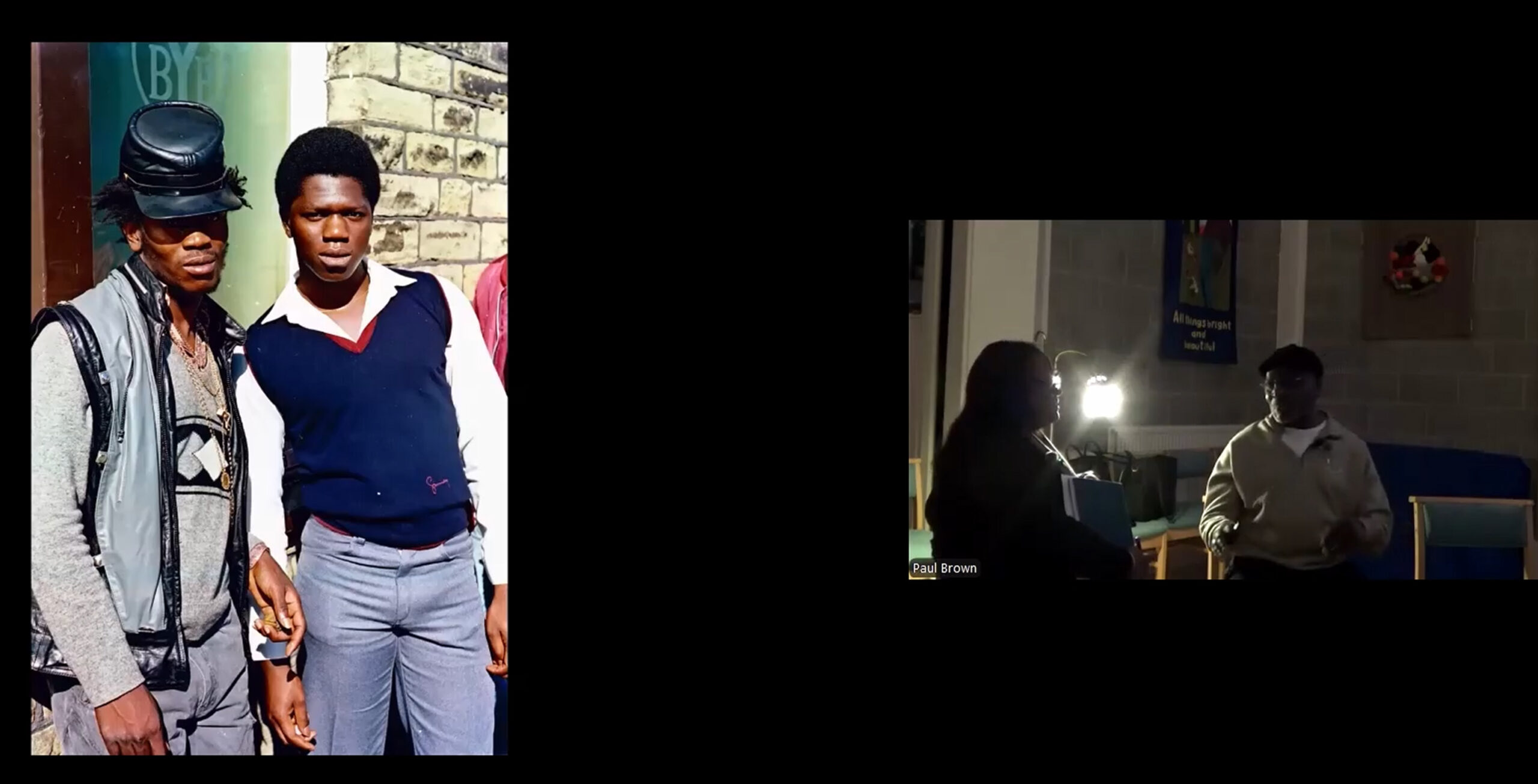
Victor Wedderburn Jr arrived in the UK from Jamaica in 1971, aged 16, joining his Windrush-generation family in Bradford.
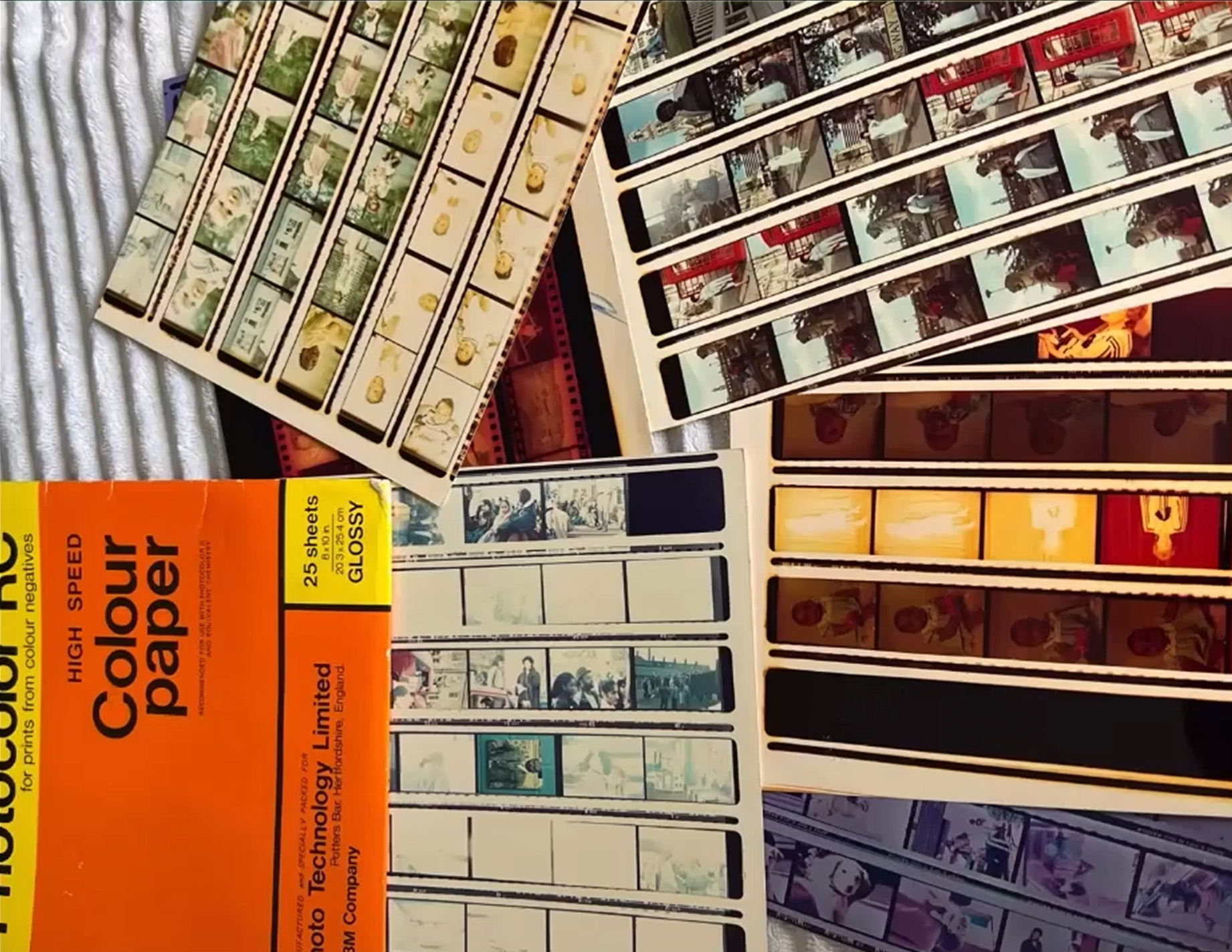
In the early 1980s, while working at Crofts Engineers, he was made redundant. Rather than allow that to be a setback, he used his redundancy pay to buy a second-hand camera and film development kit — essentially kick-starting a self-taught life in photography.
Over time, he documented street life, cultural gatherings, protests, parties, daily routines — essentially becoming a visual historian of Bradford’s African Caribbean communities.
Until recently, many of these photographs lay unseen in boxes and negatives, quietly chronicling a chapter of Bradford life that too often went unrecorded
The Presentation: Memory, Place, Power
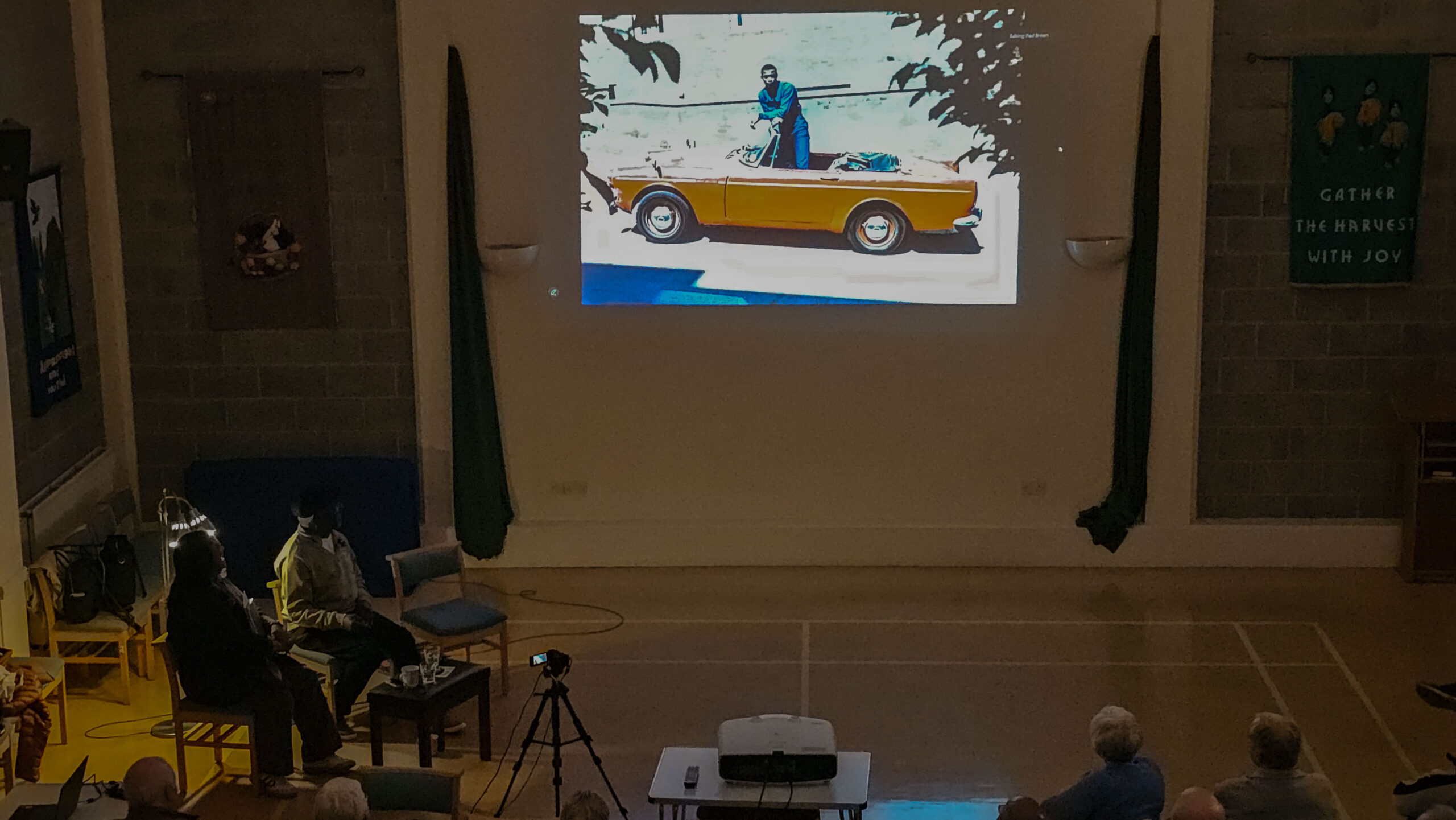
Victor’s talk was conversational, generous, full of context. Key themes and highlights included:
-
Lumb Lane (“The Frontline”) as cultural heart: He guided us through images of Roots Records Shop and The Perseverance Hotel — landmarks around which community life, music, socializing and activism pulsed.
-
Sound system parties & street rhythm: We saw photographs of gatherings under open skies, sound systems thumping, people dancing, children playing — moments of joy, resistance and creativity.
-
Anti-apartheid marches, activism, collective memory: Victor reminded us that these communities were not passive — they marched, protested, asserted their rights and their hope. He showed images of rallies (even in Huddersfield) where Bradford’s African Caribbean community allied with broader struggles.
-
Faces, gestures, nuance: He lingered on portraits — a hand on a shoulder, a child’s gaze, a shopfront sign — emphasizing that the everyday is political, and that small detail carries weight.
Throughout, Marcia Churley acted as a thoughtful interlocutor — drawing out local connections, anchoring these images for us in our shared geography, and gently reminding us that the past still murmurs beneath the present.
The Exhibition: Frontline 1984/1985 and Beyond
Victor’s images recently achieved public visibility through Frontline 1984/1985, his debut exhibition as part of Bradford 2025 — UK City of Culture.
Some exhibition details:
-
The exhibition ran in Loading Bay (Bradford) from April to May 2025, showcasing over 100 colour images documenting Bradford’s African Caribbean communities in the 1980s.
-
A selection is also displayed at the National Science & Media Museum in Bradford (12 June – 29 October 2025) as part of the wider City of Culture programme.
-
These images were largely unpublished until the exhibition — many negatives had remained in storage, unseen by public eyes.
-
The curatorial team, community groups (including Checkpoint, Dominica Association and Windrush Generations UK), and funding support allowed this archive to emerge into public view.
Victor’s photographs have been lauded for capturing an “unseen side of Black Britain” — images that are both documentary and deeply affecting, blending grit and tenderness.
Clubroom Reflections & Reactions
Our members responded with energy and curiosity. Several photographers spoke of how Victor’s work reframed what “street photography” can do: not just aesthetics, but social memory.
-
Some commented on the richness of colour and light in images from decades past — the way a red wall, a patterned dress or shopfront sign still speaks to the present.
-
Others thanked Victor for reminding us that archives live in families, attics, and shoeboxes — and that sometimes, the best work comes from committed observation, not always from grand training or grant funding.
-
Marcia’s local insight helped ground the talk. When she pointed out a building on Lumb Lane that used to exist, or a shop many had passed without noticing, it created a bridge between what we see now and what once was.
In sum, the night felt like more than a talk — it was a kind of communal remembering.
Why This Matters (For Photographers, Historians & Us)
Restoring neglected voices: Victor’s archive helps make visible what conventional histories omit — everyday lives, community networks, cultural resilience.
Photography as social documentation: His path shows that you don’t necessarily have to be institutionally trained to contribute meaningfully. The impulse to see, bear witness, preserve — that’s powerful.
Local memory, global resonance: The story of anti-apartheid marches, sound systems, diasporic lives — these are Bradford stories, yes, but also threads in larger histories.
Inspiration for our work: For club members, it’s a nudge — what are the stories in our own streets that might go unnoticed? What archives lie dormant?
Thank You
A heartfelt thanks to Victor Wedderburn for sharing his journey, his work, and his quiet courage in bringing this archive to light. And thank you to Marcia Churley for hosting with warmth, local knowledge and care.
To the Bingley Camera Club — thank you for showing such thoughtful engagement, curiosity, and respect. This meeting reminded us that photography is not just about capturing a moment — it’s about anchoring memory.
I look forward to the next meeting (and who knows — maybe we’ll get inspired to dig out our own buried negatives!).

